Accessibility Inspection through Mobile Applications and New Standards
With over a billion people globally living with some form of disability, accessibility is a pressing concern for organisations of every size and type. Many day-to-day environments and services can present significant barriers for people with mobility, visual, hearing, or cognitive impairments. Accessibility inspection is imperative for any organisation that deals with customers and does not wish to exclude those with a disability from accessing its services or products.
The International Organization for Standardization (ISO) has released ISO 21902, titled Tourism and Related Services: Accessible Tourism for All. This is an international first: a standard that aims to ensure equal access and enjoyment of tourism services for all people, regardless of physical or cognitive ability. It is a landmark change in the way the tourism and travel sectors think about inclusivity, and its implications reach far beyond those industries into any space where public access is relevant.
Why Accessibility Inspection Matters
Organisations that fail to conduct regular accessibility inspections risk more than regulatory penalties. They risk excluding loyal customers and employees, exposing themselves to discrimination complaints, and damaging their reputation in an increasingly inclusive business culture. Whether you operate a hotel, a shopping centre, a construction site, a government facility, or a public transport network, the obligation to provide safe and accessible environments is both legal and ethical.
Accessibility issues often arise gradually. A ramp that meets compliance requirements on day one can deteriorate over months of use. An accessible lift may develop faults that go unnoticed without a regular digital inspection program. Even seemingly minor issues, such as a door that requires excessive force to open or a tactile surface that has become slippery, can create genuine barriers for people with a disability. Regular, documented inspection is the only way to identify and address these issues before they become incidents or complaints.
ISO 21902: A New Standard for Accessible Tourism
ISO 21902 is significant because it provides a globally recognised benchmark for accessible tourism. For businesses and organisations operating in or acting as stakeholders within the tourism and travel sectors, this standard is a foundational guide to what inclusive service delivery looks like in practice. It requires organisations to think holistically about how every element of a customer's experience, from booking and arrival to departure, meets the needs of people with different abilities.
The standard does not seek to reduce or restrict the services available today. Rather, it aims to ensure that those services are designed and delivered in a way that is accessible to everyone. Organisations that conduct inspections aligned with ISO 21902 demonstrate that they take inclusivity seriously and are willing to back that commitment with documented evidence of compliance.
For inspectors and compliance managers, ISO 21902 provides the content for inspection checklists. The challenge lies in conducting those inspections efficiently, accurately, and consistently across multiple sites and inspection types. This is where digital compliance solutions become indispensable.
How Mobile Devices Transform Accessibility Inspections
Conducting accessibility inspections on paper-based checklists creates an environment where errors, delays, and incomplete records are routine. Inspectors carry clipboards through buildings, record findings by hand, and then transfer those notes into a system later. Photographs must be taken separately, printed, and attached to reports. The entire process is slow, error-prone, and difficult to scale across multiple sites.
Mobile inspection applications on smartphones and tablets transform this experience entirely. Inspectors work through digital checklists purpose-built for accessibility audits, tapping through each item, capturing photos directly within the checklist, annotating images to highlight areas of concern, and scanning barcodes or QR codes to instantly identify the asset being inspected. All data is captured in real time, at the point of inspection, and immediately available to management and compliance teams.
Consider a few practical examples of how mobile accessibility inspection works in the field:
An inspector scans the lift's barcode, opens the dedicated checklist on their tablet, and works through each item: door clearance, button height, audible floor announcements, emergency phone accessibility, and floor level accuracy. Any non-conformance triggers an automatic corrective action notification to the facilities manager.
The inspector photographs wear and degradation on a ramp surface, annotates the image to indicate the area of concern, records the gradient measurement, and compares the result against both the applicable standard and previous inspection records stored in the system.
For spaces used by people with visual or hearing impairments, the inspector verifies tactile ground surface indicators, audio-visual emergency warning systems, signage contrast ratios, and wayfinding marker integrity. The completed report is auto-generated and dispatched to the building manager within minutes of the inspection concluding.
Attaching Standards and Reference Material to Checklists
One of the most valuable features of mobile inspection software for accessibility audits is the ability to attach reference material directly to inspection checklists. An inspector completing an ISO 21902 assessment can have the relevant clauses, diagrams, and tolerance specifications accessible on their device at the point of inspection. This removes the need to carry printed standards manuals and ensures that inspectors are always applying the most current version of the applicable requirements.
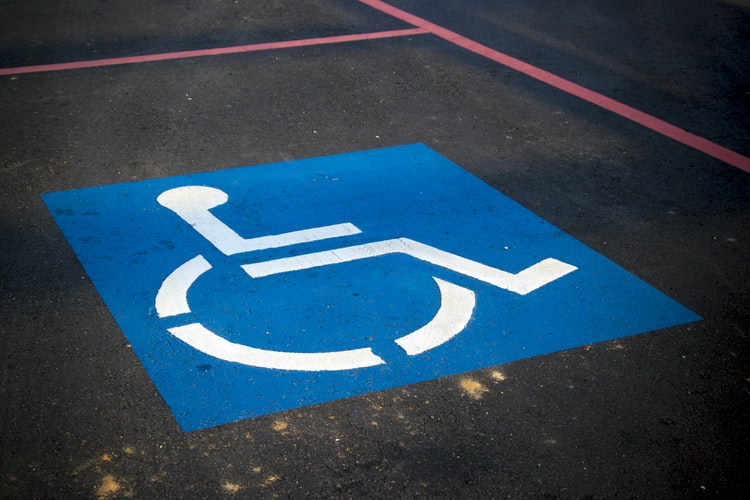
Previous inspection records, photographs of prior defects, and corrective action histories can also be linked to each asset in the inspection system. This means that an inspector reviewing the condition of an accessible parking bay can immediately see the findings from the last three inspections and track whether a previously noted issue has been resolved or is continuing to deteriorate.
Real-Time Reporting and Automated Corrective Actions
When an accessibility non-conformance is identified during an inspection, immediate action is often needed. A blocked accessible entrance or a malfunctioning lift can affect the safety and dignity of customers or employees right now, not at the end of the week when paper reports are finally submitted and reviewed.
Digital inspection platforms with automated notifications and CMMS work order integration address this problem directly. When a non-conformance is recorded, a work order can be automatically generated and dispatched to the relevant maintenance team or contractor. The issue is logged, tracked, and closed within the same system, creating a complete and auditable record of how the organisation identified and resolved the accessibility concern.
Compliance Documentation for Audits and Certification
Maintaining comprehensive documentation of accessibility inspections is increasingly important as regulatory scrutiny increases and standards like ISO 21902 become more widely adopted. Digital inspection records provide organisations with a structured, searchable, and exportable history of every accessibility inspection conducted, every defect identified, every corrective action taken, and every reinspection completed.
This documentation is invaluable when responding to a complaint, preparing for an external audit, or seeking certification against a specific accessibility standard. It demonstrates to regulators, auditors, and the community that the organisation takes its accessibility obligations seriously and has a functioning, documented system to meet them.
For any organisation committed to inclusion, the combination of a recognised standard such as ISO 21902 and a capable mobile inspection platform is a powerful foundation for delivering genuinely accessible environments to all customers, visitors, and staff.
Naaman Shibi is a VP at Pervidi Software, leading the adoption of AI-powered inspection and compliance solutions across industries including mining and construction. With more than 25 years of experience in digital transformation, Naaman has helped organisations replace paper processes with efficient mobile technology. His focus is on delivering practical innovations, from AI image integration to predictive maintenance, that empower frontline teams and improve operational outcomes.
Ready to go paperless?
See how Pervidi helps organisations streamline inspections, reduce risk, and maintain compliance with mobile-first digital solutions.
Book a Demo