Back to Basics: Tracking and Inspecting Fall Protection Equipment
Fall protection is one of the most critical aspects of workplace safety in industries where workers regularly operate at heights. Construction sites, manufacturing facilities, utilities infrastructure, mining operations, and telecommunications towers all require workers to ascend ladders, work on elevated platforms, and navigate rooftops and structures where a single moment of equipment failure can be fatal.
The fall protection equipment that stands between a worker and a serious incident, including harnesses, lanyards, shock absorbers, anchor points, and lifelines, must be maintained in perfect condition. Ensuring this is not just a regulatory obligation but a moral responsibility. Yet tracking and inspecting fall protection equipment across a workforce of any size is a genuinely complex operational challenge when approached through manual, paper-based processes.
Why Tracking Fall Protection Equipment is Essential
Fall protection equipment does not last indefinitely. Harnesses degrade with use, exposure to UV radiation, chemicals, and physical stress. Lanyards can develop micro-tears in the webbing that are invisible to a casual glance but compromise the load-bearing capacity of the equipment. Shock absorbers that have been deployed in an arrested fall must be retired, regardless of their apparent physical condition. Anchor points can corrode or loosen without visible external signs.
The consequences of deploying defective fall protection equipment are well-documented in workplace safety statistics. Australia's work health and safety regulators consistently identify falls from height as one of the leading causes of workplace fatality and serious injury. In many of these incidents, the contributing factors include equipment that was past its inspection date, not correctly maintained, or used beyond its rated service life.
Regular, structured inspection linked to a comprehensive asset management system is the only reliable way to ensure fall protection equipment remains within its certified safe operating parameters throughout its service life.
The Limitations of Traditional Equipment Tracking
Many organisations still manage fall protection equipment inspection through paper forms, spreadsheets, or standalone databases. These approaches have a range of common weaknesses:
- Records become separated from the equipment they relate to, making it difficult to determine the inspection history of a specific item
- Recurring inspection schedules are difficult to maintain reliably without automated reminders
- Equipment that has been deployed in a fall arrest event may not be identified and removed from service promptly
- Audit requests require manual searching through physical or digital records that may be incomplete or inconsistently maintained
- Trends in equipment degradation across a fleet are difficult to identify without analytical tools
These limitations are not merely administrative inconveniences. In the context of fall protection, they represent genuine safety risks that can have fatal consequences.
How Digital Tools Simplify Fall Protection Inspection
Barcode and RFID Tagging
Every piece of fall protection equipment can be uniquely tagged with a barcode, QR code, or RFID label. Scanning the tag with a mobile device instantly opens the inspection record for that specific item, showing its full history including purchase date, service life, previous inspection results, and any instances of deployment in a fall arrest event. This eliminates the uncertainty of manual identification and ensures every inspection is linked to the correct asset record.
Structured Digital Inspection Checklists
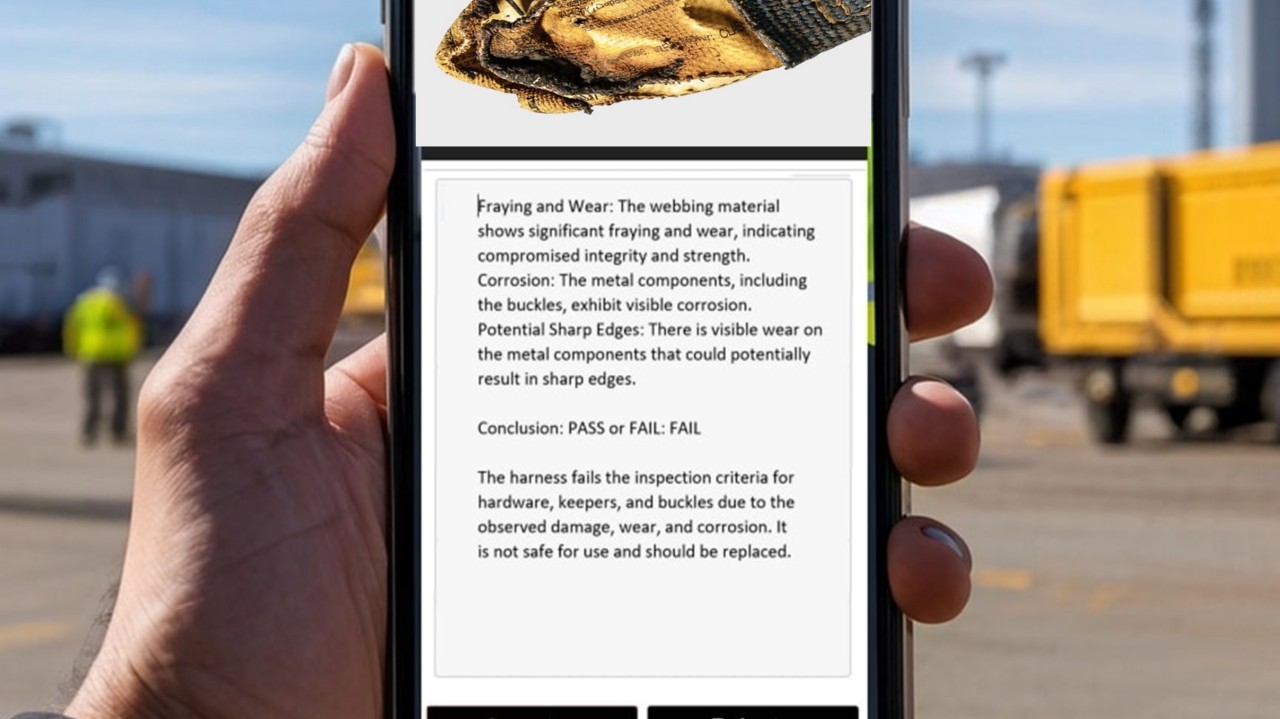
Inspection checklists for fall protection equipment can be configured to align with AS/NZS 1891 (Industrial Fall Arrest Systems and Devices), manufacturer specifications, and organisational requirements. Inspectors work through the checklist on a tablet or smartphone, recording the condition of webbing, hardware, stitching, labels, and connecting components. Photographs of any defects are attached to the inspection record at the point of discovery.
Automated Inspection Scheduling
Most fall protection equipment requires inspection at defined intervals, typically pre-use checks by the user and periodic formal inspections by a competent person. A digital inspection platform can schedule these inspections automatically, sending notifications to the responsible inspector when an inspection is due and escalating to management if it is not completed on time. Equipment that is overdue for inspection can be automatically flagged as unavailable for use until the inspection is completed.
Real-Time Reporting and Alerts
When an inspection identifies defective or expired equipment, an immediate alert is sent to the supervisor or safety manager. The item is flagged in the system and its status changed to reflect that it is out of service. This real-time visibility prevents a situation where a worker picks up a harness that has already been condemned and attempts to use it, a scenario that is more common than many organisations would like to acknowledge.
Benefits of Automating Fall Protection Equipment Management
- Compliance with Standards: Automated scheduling and documentation ensure that all inspection obligations under AS/NZS 1891 and Work Health and Safety regulations are met and evidenced.
- Reduced Incident Risk: Defective equipment is identified and removed from service before it can be deployed in a working-at-heights situation.
- Workforce Accountability: Digital records show who inspected which equipment, when, and with what outcome, building accountability into the inspection culture.
- Fleet Optimisation: Trend analysis across the equipment fleet identifies items that are failing more frequently, supporting decisions about replacement schedules and procurement.
- Audit Readiness: Complete, searchable inspection records are available for WHS regulator audits, insurance reviews, and incident investigations at any time.
Integrating with Broader Safety Management Systems
Fall protection equipment inspection does not exist in isolation. It is one component of a broader workplace safety and compliance program that includes site hazard assessments, work at heights permits, rescue planning, and competency verification. Digital inspection platforms that integrate with broader safety management systems create a unified picture of the organisation's safety posture, rather than a collection of disconnected records.
For organisations serious about protecting workers from falls, the combination of barcode or RFID tagging, structured digital inspection checklists, automated scheduling, and real-time reporting represents a significant upgrade over paper-based approaches. The technology is proven, accessible, and straightforward to implement. The case for making the transition is, quite simply, the safety of the people who rely on this equipment every day they go to work at height.
Naaman Shibi is a VP at Pervidi Software, leading the adoption of AI-powered inspection and compliance solutions across industries including mining and construction. With more than 25 years of experience in digital transformation, Naaman has helped organisations replace paper processes with efficient mobile technology. His focus is on delivering practical innovations, from AI image integration to predictive maintenance, that empower frontline teams and improve operational outcomes.
Ready to go paperless?
See how Pervidi helps organisations streamline inspections, reduce risk, and maintain compliance with mobile-first digital solutions.
Book a Demo