ISO 22095 Chain of Custody Management and Inspection
The International Organization for Standardization has developed a new standard for managing chain of custody, reducing risks and loss of time, as well as addressing conditions in production. ISO 22095, "Chain of Custody, General Terminology and Models", aims to provide a common ground across business types and sectors for organisations to work from. The standard establishes shared language and structural models that make chain of custody systems more interoperable, auditable, and effective.
The new international standard not only allows users to reduce their costs but ensures product integrity and quality. This is achieved through tackling certain issues in the wide variety of chain of custody systems prevalent today. Many organisations with digital inspection solutions can therefore be prepared to take advantage of simplified language and better management across their relevant supply chains. Because of the broad nature of ISO 22095, the standard truly represents an industry guideline that can affect almost any organisation.
What Is Chain of Custody and Why Does It Matter?
Chain of custody refers to the documented sequence of custody, control, transfer, analysis, and disposition of physical or digital evidence or material as it moves through a supply chain. It answers a fundamental question: can an organisation demonstrate, at any point in time, exactly where a product came from, who handled it, and under what conditions it was processed or stored?
For many industries this is not optional. Food safety regulations require traceability from farm to shelf. Timber and fisheries certifications require verified origin claims. Pharmaceutical supply chains require chain of custody documentation to satisfy regulatory bodies including the TGA in Australia and the FDA in the United States. Financial and legal contexts require it for evidentiary integrity. The breadth of ISO 22095 reflects the breadth of industries where chain of custody management is a compliance and commercial imperative.
Without a structured framework, organisations implement chain of custody systems independently, with incompatible terminology, inconsistent models, and variable audit trails. ISO 22095 addresses this by providing a universally agreed vocabulary and a set of reference models that organisations can adopt regardless of sector, size, or geographic location.

Key Areas Addressed by ISO 22095
Raw Material Quality and Origin Verification
For adopters of ISO 22095, the standard initially clarifies issues such as raw material quality, food safety, and product sustainability. These are areas where claims made at the point of sale, organic, sustainably sourced, responsibly manufactured, require verifiable chain of custody documentation to be substantiated. ISO 22095 provides the terminological and model foundation for building systems that can support those claims credibly.
Alignment with Existing ISO Frameworks
ISO 22095 does not operate in isolation. By merging ISO 22095 with in-house chain of custody systems, it becomes possible for organisations to see how differently they may be working compared to industry-average operations, while also saving time by avoiding building a chain of custody system from scratch. The standard falls in line with other ISO frameworks that help shape many international workplace and business standards, and it complements frameworks such as ISO 45001 for occupational health and safety, ISO 9001 for quality management, and ISO 14001 for environmental management, which may have overriding values that ISO 22095 requires or complements.
Reducing Risk and Operational Loss
Gaps in chain of custody documentation create exposure. A product recall without complete traceability data means a broader, more costly withdrawal. A certification audit without complete records risks decertification. A legal dispute over product origin without documented chain of custody weakens the organisation's position significantly. ISO 22095 provides the structural basis for systems that close these gaps systematically rather than reactively.
How Digital Inspection Software Supports ISO 22095 Implementation
This is something that can be done with digital inspection platforms with ISO 22095 checklists integrated into inspection reports. By giving personnel the various checkpoints of such a standard checklist, along with necessary reference material from the ISO 22095 standard, organisations can accurately measure their chain of custody setup for an initial assessment and support continuous monitoring thereafter.
ISO 22095 Checklists Built Into the Inspection Workflow
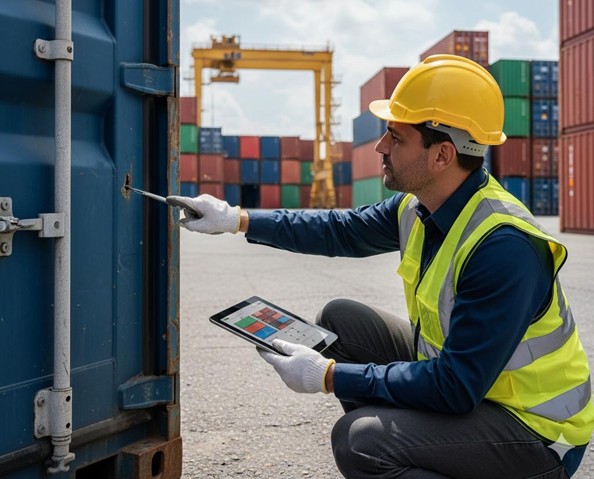
A digital compliance platform can embed ISO 22095 checkpoints directly into the inspection forms used at each stage of the supply chain, goods receipt, in-process handling, storage, transfer, and dispatch. Rather than relying on inspectors to cross-reference a paper standard during audits, the relevant requirements are embedded in the workflow itself. Mandatory fields prevent incomplete submissions. Structured response options produce data that is comparable across sites, shifts, and suppliers.
Rapid Propagation of Standard Updates
A significant benefit for inspection personnel using digital applications is that the paperless nature means checklists can be updated rapidly. If an update is issued from ISO or an industry regulator that is in line with ISO 22095 or another standard, the update can be pushed through the organisation much more quickly than with paper-based inspection systems. Besides avoiding lost time, this reduces safety risks, machinery faults, organisational costs, and many other important factors.
Tamper-Evident Audit Trails
Chain of custody documentation is only as credible as the integrity of the records themselves. Digital inspection platforms generate timestamped, server-side records that cannot be backdated or altered after submission. Every transfer, every inspection, every observation is captured with the identity of the person who completed it, the time it was submitted, and, where applicable, the GPS coordinates of the location. This level of evidential integrity is difficult to achieve with paper-based systems and is precisely what regulators and certification bodies look for when auditing chain of custody compliance.
Multi-Standard Support in a Single Platform
Digital inspection platforms let inspection personnel carry out a multitude of inspection, audit, and quality assurance checks depending on the business type. This creates the possibility to include other ISO standards such as ISO 45001 or ISO 9001 alongside ISO 22095 within the same platform. A single inspection app can handle pre-shift safety checks, quality audits, environmental assessments, and chain of custody verifications, with all data flowing into a unified reporting environment.
Consumer and regulatory scrutiny of sustainability claims is increasing. ISO 22095 provides the chain of custody framework that underpins certifications such as FSC (forestry), MSC (fisheries), and Rainforest Alliance (agriculture). Organisations using digital inspection platforms can embed the relevant chain of custody checkpoints into their supplier audits and goods receipt processes, generating the continuous documentation these certification schemes require.
Practical Steps for Implementing ISO 22095 with Digital Inspection Software
1. Map Your Current Chain of Custody System
Before configuring checklists, document the existing custody transfer points in your supply chain, where materials change hands, where ownership transfers, where physical condition is assessed, and where documentation is currently generated. This mapping exercise often reveals gaps that the ISO 22095 framework will need to address.
2. Configure ISO 22095-Aligned Checklists
Work with your inspection platform provider to build checklists that mirror the ISO 22095 terminology and model at each custody transfer point. Key checkpoints typically include origin verification, condition assessment at receipt, storage condition monitoring, processing or transformation records, and dispatch documentation.
3. Integrate with Existing ISO Frameworks
Identify the intersections between ISO 22095 and your existing management system standards. Where ISO 9001 quality controls overlap with chain of custody checkpoints, consolidate the inspection steps to avoid duplication. Where ISO 45001 safety requirements govern the conditions under which custody transfers occur, ensure those requirements are visible in the same workflow.
4. Monitor Continuously and Report on Demand
ISO 22095 compliance is not a one-time certification exercise, it is an ongoing operational requirement. Digital inspection data enables management dashboards that show chain of custody completion rates by supplier, site, product line, or date range. When a certification audit or regulatory inspection occurs, complete chain of custody records are accessible and exportable immediately, without manual retrieval from filing systems.
Frequently Asked Questions
Which industries is ISO 22095 most relevant to?
ISO 22095 is designed to be sector-neutral and applies across any industry where product traceability and chain of custody documentation are required. Industries where adoption is most prevalent include food and beverage, timber and forestry, fisheries and aquaculture, pharmaceuticals, mining and minerals, and manufacturing. The standard's universal terminology also makes it relevant to logistics providers operating across multiple industry sectors.
Does ISO 22095 replace existing sector-specific chain of custody standards?
No. ISO 22095 is a foundational standard that establishes common terminology and models. It is designed to complement rather than replace sector-specific frameworks such as FSC, MSC, GMP, or industry-specific regulatory requirements. Organisations typically apply ISO 22095 as a common layer that makes their existing sector-specific chain of custody systems more coherent and auditable.
How does a digital inspection platform generate the audit trail ISO 22095 requires?
A digital inspection platform generates a tamper-evident, timestamped record for every custody transfer point, who completed the check, when, where, and what was observed. These records are stored in the cloud, searchable by product, batch, supplier, or date, and exportable in formats suitable for regulatory submissions and certification audits. The immutability of digital records provides a stronger audit trail than paper-based systems that can be lost, damaged, or completed retrospectively.
Build a stronger chain of custody with Pervidi
Book a 30-minute demo to see how Pervidi embeds ISO 22095 checkpoints into your supply chain inspections, generates tamper-evident audit trails, and supports continuous chain of custody monitoring across your entire operation.
Book a demoNaaman Shibi is a VP at Pervidi Software, leading the adoption of AI-powered inspection and compliance solutions across industries including mining and construction. With more than 25 years of experience in digital transformation, Naaman has helped organisations replace paper processes with efficient mobile technology. His focus is on delivering practical innovations, from AI image integration to predictive maintenance, that empower frontline teams and improve operational outcomes.