ISO 22948 and the Importance of Assessing Organisational Seafood Standards
Seafood is one of the world's most traded food commodities and one of the most ecologically complex to produce sustainably. As consumer awareness of environmental impact grows and regulatory frameworks increasingly require organisations to report on their carbon footprint and sustainability credentials, the aquaculture and seafood processing sectors face mounting pressure to demonstrate that their operations meet internationally recognised environmental standards.
ISO 22948, titled "Carbon Footprint for Seafood: Product Category Rules", is the International Organization for Standardization's response to this need. It provides a standardised framework for calculating the carbon footprint of seafood products from catch or harvest through to the point of consumption, enabling organisations across the aquaculture value chain to measure, report, and ultimately reduce their environmental impact in a consistent, comparable way.
What ISO 22948 Covers
ISO 22948 establishes product category rules (PCRs) for conducting life cycle assessments of seafood products. A product category rule provides a standardised methodology for calculating the greenhouse gas emissions associated with a specific category of product, ensuring that carbon footprint calculations are conducted consistently across different organisations and can be meaningfully compared.
For seafood, this means the standard defines how organisations should account for emissions at every stage of the product's journey, from the energy consumed by fishing vessels or aquaculture facilities, through feed production and processing, to refrigeration, transport, and distribution. The scope of ISO 22948 covers both wild-caught seafood and farmed aquaculture products, acknowledging the distinct emission profiles of each production method.
Without a standardised methodology, different organisations measuring the carbon footprint of comparable seafood products may arrive at very different figures depending on the assumptions and boundaries they apply. ISO 22948 resolves this by providing a common set of rules that makes carbon footprint figures for seafood products directly comparable across producers, regions, and supply chains. For organisations that need to report sustainability data to retailers, certification bodies, or regulators, ISO 22948 compliance provides credibility that internally developed methods cannot.
The Aquaculture Value Chain and Its Inspection Requirements
Applying ISO 22948 across an aquaculture value chain requires the collection of substantial operational data. Every stage of production that contributes to the carbon footprint calculation must be documented: fuel consumption by harvest vessels, energy use at hatchery and grow-out facilities, feed ingredient origins and production emissions, refrigeration energy, transport distances and modes, and processing facility energy consumption.
This data-gathering requirement aligns closely with the kinds of regular inspection and monitoring activities that aquaculture and seafood processing businesses already perform for quality assurance and food safety purposes. The organisations that find ISO 22948 implementation most straightforward are typically those that have already established robust inspection and data capture processes across their operations.
- Vessel fuel consumption logs and engine maintenance records
- Feed supplier documentation including ingredient sourcing and production emissions data
- Facility energy metering records across hatchery, grow-out, and processing stages
- Cold-chain temperature and refrigeration system inspection records
- Transport and logistics records including distance, mode, and load data
- Waste and by-product disposal records including volumes and disposal methods
Organisations that rely on paper-based records to capture this data face significant challenges when attempting to compile it for an ISO 22948 carbon footprint calculation. Records across different sites and operational stages may use inconsistent formats, may not capture all the required data fields, or may be difficult to aggregate at the frequency needed for accurate reporting. Digital inspection platforms address these challenges by providing a single, structured system for capturing all required data across the full value chain.
How Digital Inspection Supports ISO 22948 Compliance
Mobile Data Capture in Marine and Remote Environments
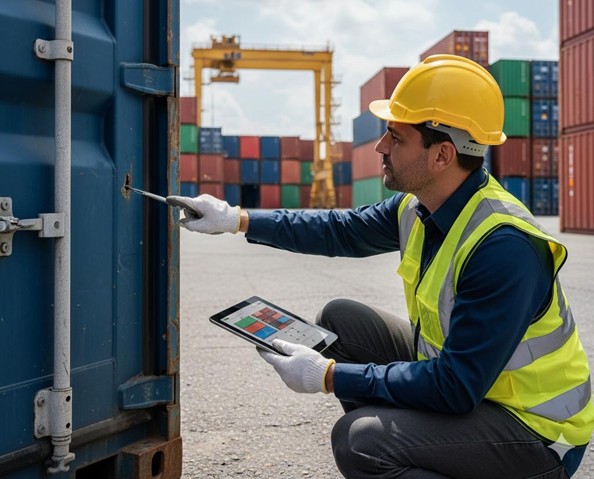
The aquaculture and seafood sectors operate in environments that make paper-based inspection particularly challenging. Vessels at sea, remote aquaculture sites, and processing facilities with wet or cold working conditions are not well suited to paper forms. Modern mobile devices running digital inspection applications are significantly more practical in these environments.
The camera built into a mobile device can be used to photograph equipment readings, capture barcodes on feed bags for traceability, or document the condition of refrigeration equipment during routine inspections. All photographs are automatically attached to the relevant inspection record, providing visual evidence that supports both the carbon footprint calculation and any quality or safety audits that may also rely on those records.
RFID and Barcode Scanning for Traceability
ISO 22948 carbon footprint calculations require accurate data about the origin and processing history of seafood products. RFID scanning and barcode reading capabilities on modern mobile devices allow inspectors to identify individual batches, trays, or containers at every stage of the process and associate the relevant energy and emissions data with that specific product lot. This level of traceability supports both the carbon footprint reporting required by ISO 22948 and the broader compliance and sustainability reporting that seafood businesses increasingly need to provide to major retail customers and export market regulators.
Offline Capability for Vessel and Remote Site Inspections
A practical requirement for any digital inspection tool used in the seafood sector is the ability to operate without a consistent internet connection. Fishing vessels at sea and remote aquaculture sites may have limited or intermittent connectivity. Digital inspection platforms with offline capability allow inspectors to complete their checklists and capture all required data without a network connection, with the data synchronised automatically when connectivity is restored. This ensures that the completeness of ISO 22948-relevant records is not compromised by the practical realities of operating in remote marine environments.
Regulatory Accessibility on Mobile Devices
One of the practical advantages of digital inspection platforms for organisations navigating complex regulatory environments like ISO 22948 is that the relevant regulations and standard requirements can be made accessible on the mobile device used for inspections. Rather than requiring inspectors to carry printed copies of standards documentation or return to the office to check requirements, all relevant compliance references can be embedded within the digital inspection platform and accessed at the point of inspection. This ensures that the personnel conducting inspections have the information they need to apply the correct methodology, wherever they are working.
For organisations in the compliance and quality assurance space managing multiple regulatory obligations simultaneously, this capability significantly reduces the training burden and the risk of inspectors applying incorrect methodologies in the field.
Frequently Asked Questions
Which types of organisations need to apply ISO 22948?
ISO 22948 is relevant to any organisation seeking to calculate and report the carbon footprint of seafood products using an internationally recognised, standardised methodology. This includes wild-catch fishing operations, aquaculture producers, seafood processors and manufacturers, and organisations across the seafood supply chain that need to report on the environmental credentials of the products they handle. It is also relevant to certification bodies, retailers, and regulators that require verified, comparable carbon footprint data from seafood suppliers.
How does ISO 22948 relate to other food safety and sustainability standards?
ISO 22948 sits within a broader ecosystem of food-related ISO standards. It complements food safety standards such as ISO 22000 (food safety management systems) and sustainability-focused standards such as ISO 14040 and ISO 14044 (life cycle assessment methodology), on which the product category rules in ISO 22948 are based. Organisations that already hold ISO 22000 certification and maintain strong inspection and documentation practices are generally well positioned to extend their systems to support ISO 22948 compliance.
Can a single digital platform support both food safety and ISO 22948 carbon footprint inspections?
Yes. A digital inspection platform can support multiple inspection types within the same application. An aquaculture business can configure separate checklists for food safety checks, HACCP verification activities, and the operational data capture required for ISO 22948 carbon footprint calculations, with all records feeding into the same centralised reporting environment. This gives the business a single source of truth for all compliance-related data, reducing duplication of effort and making it significantly easier to prepare for audits across multiple regulatory frameworks.
Support your aquaculture compliance programme with Pervidi
Book a 30-minute demo to see how Pervidi supports ISO 22948 data capture, carbon footprint reporting, and food safety compliance across the full aquaculture value chain with digital inspection on mobile devices.
Book a demoNaaman Shibi is a VP at Pervidi Software, leading the adoption of AI-powered inspection and compliance solutions across industries including mining and construction. With more than 25 years of experience in digital transformation, Naaman has helped organisations replace paper processes with efficient mobile technology. His focus is on delivering practical innovations, from AI image integration to predictive maintenance, that empower frontline teams and improve operational outcomes.