Why Lifting Inspection Demands a Systematic Approach
Lifting equipment operates at the intersection of significant mechanical forces, regulatory obligations, and serious safety risk. A chain sling under load, a crane hook under fatigue, or a shackle with a worn pin represents not just an asset management problem but a potential life-safety failure. Whether an organisation owns its lifting gear outright or sources it through hire and rental arrangements, a formal inspection procedure must be in place before any lift takes place.
The Lifting Equipment Engineers Association (LEEA) is the international authority in the lifting industry, recognised across construction, mining, manufacturing, and ports as the definitive body for lifting standards. Meeting LEEA recommendations requires organisations to consider every stage of the equipment lifecycle: refurbishment and repair, routine maintenance, hire arrangements, and end-use operation. For each stage, a dynamic, tailored inspection solution is essential. Paper-based approaches are increasingly inadequate for meeting those obligations reliably and demonstrably.
What a Lifting Inspection Programme Must Cover
A comprehensive lifting inspection programme covers a wide range of equipment types, each with specific failure modes and inspection criteria. Common categories include:
- Chains and chain slings: link wear, elongation, deformation, cracks, and heat or chemical damage
- Wire rope slings: broken wires, kinking, crushing, corrosion, and end fitting condition
- Synthetic web and round slings: cuts, abrasion, UV damage, chemical degradation, and stitching integrity
- Shackles and hooks: pin condition, deformation, cracks, and load rating markings
- Cranes and hoists: braking systems, limit switches, wire rope condition, structural integrity, and operator controls
- Spreader beams and lifting frames: weld integrity, deformation, and trunnion or shackle point condition
- Below-the-hook devices: clamps, magnets, vacuum lifters, and custom attachments
Australian Standard AS 4991 provides requirements for lifting components, while AS 2550 covers cranes, hoists, and winches. State-level WHS regulations add further requirements for inspection records, competency, and pre-use checks. Managing compliance with this framework across a large fleet of lifting assets requires more than a paper-based system can reliably deliver.
The Limitations of Paper-Based Lifting Inspection
Traditional lifting inspection relies on paper checklists carried to each asset location. An inspector locates the asset, works through the checklist, records findings by hand, and returns the completed form to the office. The process introduces multiple points of failure.
Asset identification errors are common when equipment is moved between locations or stored alongside similar items. Handwritten records are difficult to read and prone to incompleteness. When a defect is found, writing up a separate fault report and notifying the maintenance team is a manual, time-consuming process. Filing, retrieving, and aggregating paper records for audit purposes requires significant administrative overhead. And when a lifting incident occurs and investigators need a complete inspection history for a specific asset going back several years, paper archives are typically incomplete, disorganised, or missing entirely.
For hire and rental businesses in particular, the stakes are high. When equipment changes hands between customers, accurate pre-hire and post-return inspections protect the business from liability, insurance disputes, and regulatory action. A paper record that lacks a signature, a date, or a condition note is no protection at all.

How Mobile Devices Transform Lifting Inspection
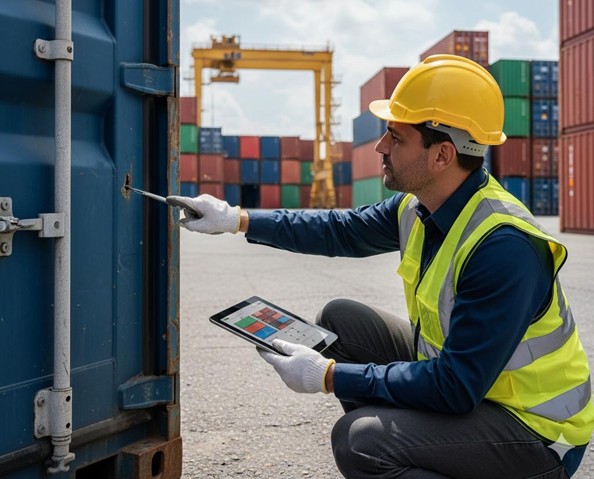
Digital lifting inspection using a paperless application run on a smartphone or tablet changes the process at every step. The inspector arrives at the asset, opens the inspection app, and is presented with a checklist specifically configured for that asset class and location. Nothing is left to memory or interpretation.
Camera and Photo Annotation
The built-in camera of the mobile device becomes a direct input to the inspection record. When a defect is found, the inspector photographs it within the app. The image is attached to the specific checklist item, timestamped, and geotagged automatically. Annotations can be drawn directly on the image to highlight wear locations, cracks, or deformation. The result is a defect record with visual evidence that is far more useful to a maintenance technician than a text note alone, and far more defensible in a compliance audit or insurance claim.
Barcode and RFID Asset Identification
Lifting assets can be tagged with barcodes or RFID labels. The inspector scans the tag before the checklist opens, confirming they are at the correct physical asset. This eliminates misidentification errors, particularly on sites where multiple similar slings or shackles are stored together. The scan creates a verified link between the physical asset, its location at inspection time, and the resulting record. For hire businesses, this means the inspection record is unambiguously tied to the specific item, not just an asset description.
GPS Timestamps and Location Verification
GPS coordinates and timestamps are recorded automatically from the device itself at the time each inspection is completed. This removes a common vulnerability in paper-based records where forms are completed in batches after the fact, rather than at the point of inspection. The automatic timestamp provides an independent verification layer that strengthens the evidential value of the inspection record in any regulatory or legal context.
Historical Asset Tracking
The inspection application maintains a full inspection history for every tracked asset, accessible via a web portal by any authorised user at any time. Whether the equipment is portable or fixed, temporary or permanent, its complete inspection record is available 24/7. This replaces the filing cabinet with a searchable, structured database. When a particular sling needs to be traced for a safety recall, or a crane's inspection history needs to be reviewed before a high-risk lift, the information is available instantly rather than requiring hours of archive searching.
Automatic Work Order Generation
When a defect is identified during inspection, the app can automatically create a corrective work order and notify the relevant maintenance team immediately. The asset can be flagged as out of service within the system, preventing it from being allocated to a job while defective. This closes the gap between finding a problem and acting on it, which in lifting operations can be the difference between a near miss and a fatality.
Cloud and On-Premises Deployment
Digital lifting inspection records no longer need to live in a filing room. Inspection data can be stored on servers managed in-house or delivered via cloud (SaaS) infrastructure. Cloud deployment provides immediate accessibility from any authorised device, eliminates the risk of records being lost in a fire, flood, or office relocation, and enables real-time visibility across multiple sites or hire branches. For multi-site operations and national hire businesses, this centralisation is a significant operational advantage.
Meeting LEEA and Regulatory Expectations
The LEEA framework and Australian Standards both expect documented evidence of systematic inspection. A digital compliance record that captures who inspected each asset, when, what was found, what action was taken, and where the asset was located at the time of inspection provides exactly that evidence in a format that is easy to retrieve, share, and defend. When a regulator or insurer requests inspection records following a lifting incident, the ability to produce complete, timestamped, photo-evidenced records within minutes rather than hours demonstrates a standard of care that paper simply cannot match.
Pervidi's digital inspection platform supports lifting equipment inspection from slings and shackles to cranes and hoists. Configure checklists to AS 4991, AS 2550, and LEEA requirements, track every asset by barcode or RFID, and build a complete compliance audit trail from the first inspection.
Talk to Our TeamNaaman Shibi is a VP at Pervidi Software, leading the adoption of AI-powered inspection and compliance solutions across industries including mining and construction. With more than 25 years of experience in digital transformation, Naaman has helped organisations replace paper processes with efficient mobile technology. His focus is on delivering practical innovations, from AI image integration to predictive maintenance, that empower frontline teams and improve operational outcomes.
Ready to streamline your lifting inspection programme?
Book a demo to see how Pervidi covers lifting equipment inspection from slings and shackles to cranes and hoists, configured to AS 4991, AS 2550, and LEEA requirements.
Book a Demo