SME Inspections and Paperless Solutions: Why Small Businesses Benefit Most
Small and Medium-sized Enterprises (SMEs) are the lifeblood of many local and national economies, often overlooked by legislators and operating with thin profit margins. For these organisations, every operational decision carries more weight than it would for a large corporation. There is little room for wasted time, duplicated effort, or processes that fail to deliver measurable value. Inspections are no exception, and it is precisely this constraint that makes digital inspection technology such a natural fit for the SME context.
Why Inspections Matter More When Margins Are Tight
The case for inspections in any business is straightforward: identifying faults and risks before they become failures or incidents is always cheaper than responding to them after the fact. For SMEs, this equation becomes even more critical. A single equipment failure that takes a key asset offline for days can disrupt an entire operation. A missed compliance check that results in a regulatory notice can carry fines that represent a significant proportion of monthly revenue. A slip-and-fall that was not preceded by a documented safety check can expose the business to workers compensation claims and personal liability for the owner or director.
Yet the inspection processes used by many small businesses remain manual. Paper forms, verbal handovers, and spreadsheets stored on a single computer are still common. These approaches are not merely inefficient; they actively create risk by producing records that are incomplete, illegible, or simply impossible to locate when they are needed.
The Three Qualities SMEs Need from an Inspection Solution
When evaluating any new operational tool, SMEs apply a practical filter that larger organisations rarely need to be so disciplined about. Three qualities tend to determine whether a tool gets adopted and embedded, or ignored after the initial trial:
- Adaptability: The solution must be configurable to the specific operations of that business, not a rigid template designed for a different industry. A cafe, a trade contractor, and a small manufacturing workshop all conduct inspections, but they inspect entirely different things.
- Time efficiency: With smaller teams and no dedicated compliance function, the inspection process must be fast. If it takes longer to complete a digital form than a paper one, the digital option will not survive contact with operational reality.
- Cost-effectiveness: The total cost of the solution must be clearly justified by the value it delivers. For an SME, this usually means demonstrating a reduction in time, a reduction in defect-related costs, or a demonstrable improvement in compliance posture that reduces regulatory risk.
Paperless inspection platforms are designed to address all three of these requirements simultaneously, which explains why adoption among SMEs has grown steadily as the software has matured and pricing models have shifted toward subscription-based access rather than large upfront licensing fees.

What Paperless Inspections Actually Change for an SME
The practical difference between a paper-based inspection process and a digital inspection platform is most visible at three points in the inspection workflow.
At the point of inspection
A paper form must be printed, distributed, carried to the inspection location, completed by hand, and then physically returned to someone who will file it or enter the data into another system. A digital form lives on the inspector's phone or tablet. It can be accessed anywhere, prompts the inspector through required fields, prevents submission if mandatory items are left blank, and is submitted instantly to the central record the moment the inspection is complete. For an SME employee who inspects the same assets every day alongside their other duties, this difference in friction is significant.
At the point of reporting
When a fault is identified on a paper form, the path from that fault to a corrective action depends entirely on whether the right person reads the form. In a digital system, a fault can automatically trigger a notification or work order routed to the person responsible for fixing it. The fault is tracked from identification through to resolution, and the record of that resolution is stored alongside the original inspection. For a small business where the owner is often also the maintenance coordinator, this automation replaces a manual follow-up loop that is easy to forget.
At the point of audit or review
When a regulator asks for inspection records, or when an incident prompts an internal review, paper-based systems typically require someone to physically locate files, often spanning multiple locations and multiple years. A digital system produces a complete, searchable audit trail instantly. For a small business that does not have a dedicated compliance function, this capability is transformative. It converts a stressful, labour-intensive process into a simple query.
A Practical Example: One App, Multiple Inspection Types
One of the most tangible benefits for SMEs is the ability to consolidate multiple inspection workflows into a single platform. Consider a small retail or hospitality business. In a single week, staff might need to complete food temperature logs, equipment safety checks, fire exit inspections, and daily opening and closing checklists. Under a paper-based system, each of these involves separate forms, separate filing systems, and separate review processes.
Under a paperless system, the same application hosts all of these checklists. Staff access the relevant checklist for their role and shift, complete it on their phone, and submit it. The business owner or manager can see, in a single dashboard, which inspections have been completed, which are overdue, and whether any faults have been flagged. The audit trail for the business becomes a single repository rather than a collection of paper files spread across multiple drawers and folders.
The Cost Argument: Why Digital Often Costs Less Over Time
The upfront question for any SME considering a move to digital inspections is whether the investment is justified. The honest answer is that for most businesses that currently use paper, the ongoing costs of the paper-based approach are higher than they appear, because many of them are hidden.
The direct costs include printing, storage, and the time staff spend filing and retrieving paper records. The indirect costs include the risk of non-compliance arising from lost or incomplete records, the cost of defects that are identified late because no one reviewed the paper forms promptly, and the productivity loss from manual data re-entry when inspection data needs to be incorporated into broader business reports.
A digital compliance and inspection platform eliminates most of these costs. Records are never lost. Faults are escalated automatically. Reporting is available in real time without manual effort. For most SMEs that make the switch, the investment pays for itself within months, with the ongoing savings compounding as the volume of inspections grows with the business.
Getting Started: What to Look for in a Platform
For an SME evaluating paperless inspection software, the most important factors are ease of setup, the ability to create and modify checklists without technical expertise, and a pricing model that scales with the size of the operation rather than requiring a large fixed commitment upfront. Equally important is mobile reliability: the platform must work on the devices your team already uses, and ideally must function offline so that inspections in areas without connectivity are not blocked.
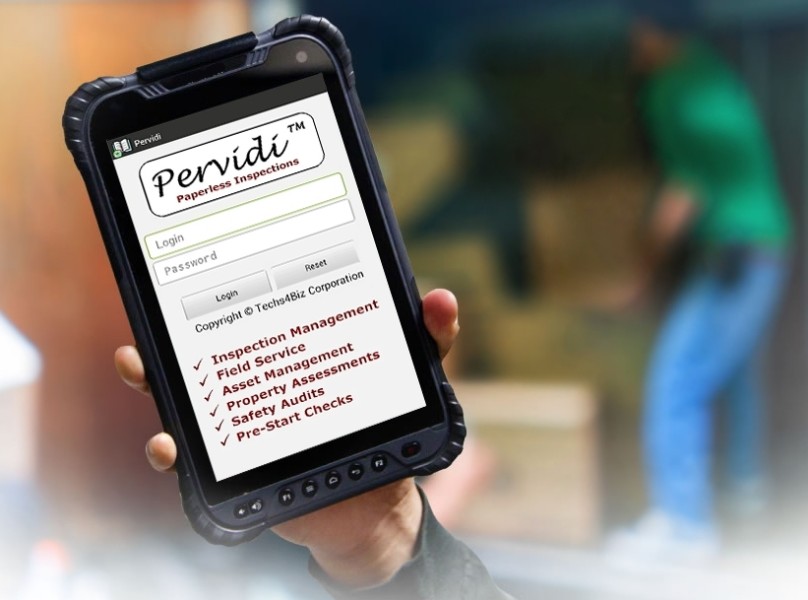
Pervidi is built with these requirements in mind. It supports an unlimited range of inspection types on a single platform, works offline on iOS and Android, and is used by businesses across retail, hospitality, facilities management, construction, and professional services. Whether your team needs to check fire safety equipment, complete vehicle pre-starts, or log daily hygiene records, the same platform handles all of it with a consistent, easy-to-use interface.
Naaman Shibi is a VP at Pervidi Software, leading the adoption of AI-powered inspection and compliance solutions across industries including mining and construction. With more than 25 years of experience in digital transformation, Naaman has helped organisations replace paper processes with efficient mobile technology. His focus is on delivering practical innovations, from AI image integration to predictive maintenance, that empower frontline teams and improve operational outcomes.
Ready to replace paper checklists with a platform your team will actually use?
Book a demo to see how Pervidi scales down to fit small business budgets and teams without cutting capability.
Book a Demo