Tracking Deficiencies Is the Leading Method to Mastering Inspections
Businesses and organisations are constantly working to improve their processes, and tracking deficiencies is a crucial part of mastering the inspection process. An inspection that identifies a deficiency but does not reliably track it through to resolution has only done half its job. The identification phase generates information. The tracking phase converts that information into improvement.
Organisations that have built strong deficiency tracking capabilities consistently outperform those that treat inspection as a compliance exercise rather than a continuous improvement tool. The difference, in almost every case, comes down to whether the deficiency tracking process is manual and paper-based, or structured and digital.
What Is a Deficiency in Inspection Terms?
In the context of inspection programs, a deficiency is any condition or situation that does not meet the required standard. This includes physical hazards such as damaged equipment or inadequate guarding, compliance gaps such as missing documentation or overdue maintenance, and quality failures such as products or processes that do not meet specification.
A deficiency is different from an observation or a recommendation. It is a documented non-conformance that requires a defined corrective action to be taken within a defined timeframe. The deficiency is not closed until the corrective action is completed and verified. This closed-loop structure is what makes deficiency tracking a powerful improvement tool rather than just a recording exercise.
The Components of Effective Deficiency Tracking
Every deficiency must be described clearly enough that anyone reading the record can understand what was found, where it was found, and why it is non-conformant. Digital inspection platforms with structured description fields and mandatory photo capture produce consistently clear deficiency records without relying on the inspector's writing skills.
Deficiencies must be classified by severity so that the most critical issues receive immediate attention. A standard severity scale, such as critical, major, and minor, applied consistently across all inspections enables management to prioritise corrective action resources effectively.
Every deficiency must be assigned to a specific person who is responsible for ensuring the corrective action is completed. Unassigned deficiencies are deficiencies that will never be resolved. Digital platforms enforce assignment as part of the deficiency creation workflow.
A due date must be set for each deficiency, calibrated to its severity. Critical deficiencies may require same-day action. Minor deficiencies may have weeks or months to resolve. Automatic escalation when a due date is missed ensures that overdue deficiencies are flagged to management rather than quietly ageing in an unfiled folder.
A deficiency is not resolved when the corrective action is claimed as complete. It is resolved when the resolution has been verified, ideally through a follow-up inspection. Digital platforms support this verification step as part of the deficiency workflow, ensuring that claimed resolutions are actually confirmed.
"Deficiency tracking is the link between inspection and improvement. Without it, inspection identifies problems but does not solve them. With it, inspection becomes the engine of continuous improvement."
Aggregate Deficiency Analysis
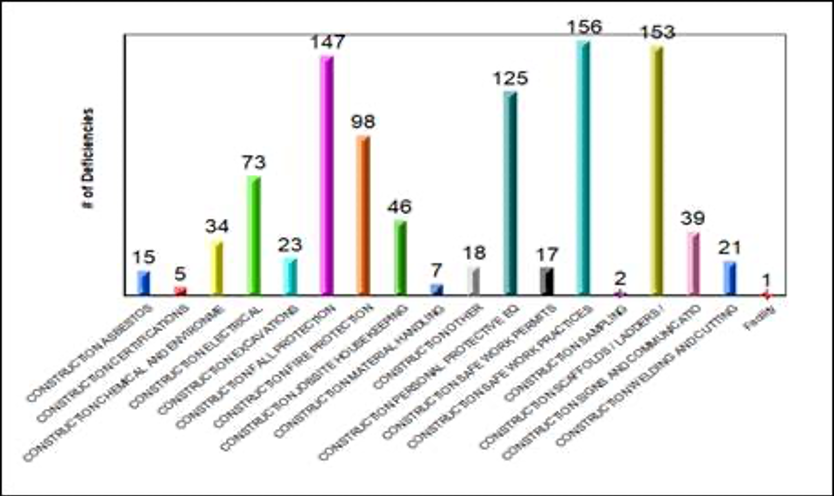
Individual deficiency tracking manages compliance at the operational level. Aggregate deficiency analysis drives improvement at the strategic level. When deficiency data is captured in structured digital form across many inspections over an extended period, patterns emerge that are invisible in paper records.
Which asset types generate the most deficiencies? Which locations consistently have higher deficiency rates than others? Which deficiency types take the longest to resolve? Which inspection teams identify the most deficiencies per inspection? These questions can only be answered when deficiency data is structured, consistent, and stored in a system that supports analysis.
From Deficiency Tracking to Continuous Improvement
The ultimate purpose of deficiency tracking is not compliance documentation but continuous improvement. When an organisation can identify that a particular type of deficiency is recurring across multiple inspections and locations, it has evidence of a systemic issue that requires a systemic response. Perhaps the relevant procedure needs updating. Perhaps training is needed. Perhaps an asset type has reached the end of its service life and should be replaced.
These systemic insights are only available when deficiency tracking is systematic and digital. For organisations using a digital inspection platform connected to an asset management system, deficiency data flows directly into the asset's maintenance and compliance history, supporting data-driven decisions across all industrial and commercial operations.
Naaman Shibi is a VP at Pervidi Software, leading the adoption of AI-powered inspection and compliance solutions across industries including mining and construction. With more than 25 years of experience in digital transformation, Naaman has helped organisations replace paper processes with efficient mobile technology. His focus is on delivering practical innovations, from AI image integration to predictive maintenance, that empower frontline teams and improve operational outcomes.
Ready to go paperless?
Discover how Pervidi's digital inspection platform can transform your organisation's compliance and efficiency.
Book a Free Demo