Why Migrating to Digital OHS Is Vital in Occupational Health and Safety
Occupational health and safety (OHS) is the backbone of any well-run workplace. Employee safety is not simply a regulatory obligation; it is fundamental to organisational performance, workforce morale, and long-term business viability. Yet despite widespread acknowledgement of its importance, workplace injuries and fatalities remain stubbornly persistent across Australian industries.
According to Safe Work Australia, someone is injured at work roughly every five minutes in Australia. The same data highlights that fatalities are concentrated in construction, agriculture, and transport and logistics, with falls, being struck by moving objects, and vehicle-related incidents accounting for the vast majority of deaths. These are not random events. They are, in most cases, preventable outcomes that structured inspection programs and real-time safety management are specifically designed to address.
The migration from paper-based OHS documentation to digital inspection platforms is one of the most practical and impactful steps an organisation can take to close the gap between safety policy and safety reality. This article examines why that shift matters and what it means in practice for organisations serious about reducing harm in the workplace.
The Limits of Paper-Based OHS
Paper-based safety inspection systems have a fundamental structural problem: they create records after the fact, store them in ways that make them inaccessible in real time, and rely on individual discipline to ensure they are completed accurately and on schedule. When an incident occurs, the paper trail often reveals that checklists were signed off incompletely, that identified hazards were not escalated, or that the relevant form was not available to the person who needed it at the critical moment.
This is not a failure of intent. It is a failure of system design. Paper is a passive medium. It cannot alert a supervisor when an inspection has not been completed. It cannot automatically escalate a hazard finding to the person responsible for corrective action. It cannot confirm, at the time of incident investigation, exactly what was checked, by whom, and when.
Digital OHS inspection tools resolve each of these limitations. Inspections are scheduled and tracked automatically. Incomplete submissions are flagged. Findings are time-stamped and GPS-tagged at the moment of entry. Hazards trigger immediate notifications to the appropriate supervisor or safety officer. The entire inspection record is searchable, reportable, and available in real time from any device.
What Effective OHS Inspection Covers
Safety inspection can mean different things across different industries and work environments. What is consistent is the need for inspections to be systematic, documented, and acted upon. Common categories of OHS inspection include:
- Pre-operational equipment checks: Verifying that machinery, vehicles, and tools are in safe working condition before use. In many industries this is a legal requirement, not a recommendation.
- Worksite hazard inspections: Identifying physical hazards such as unguarded equipment, inadequate lighting, slip and trip risks, and unsafe storage of materials.
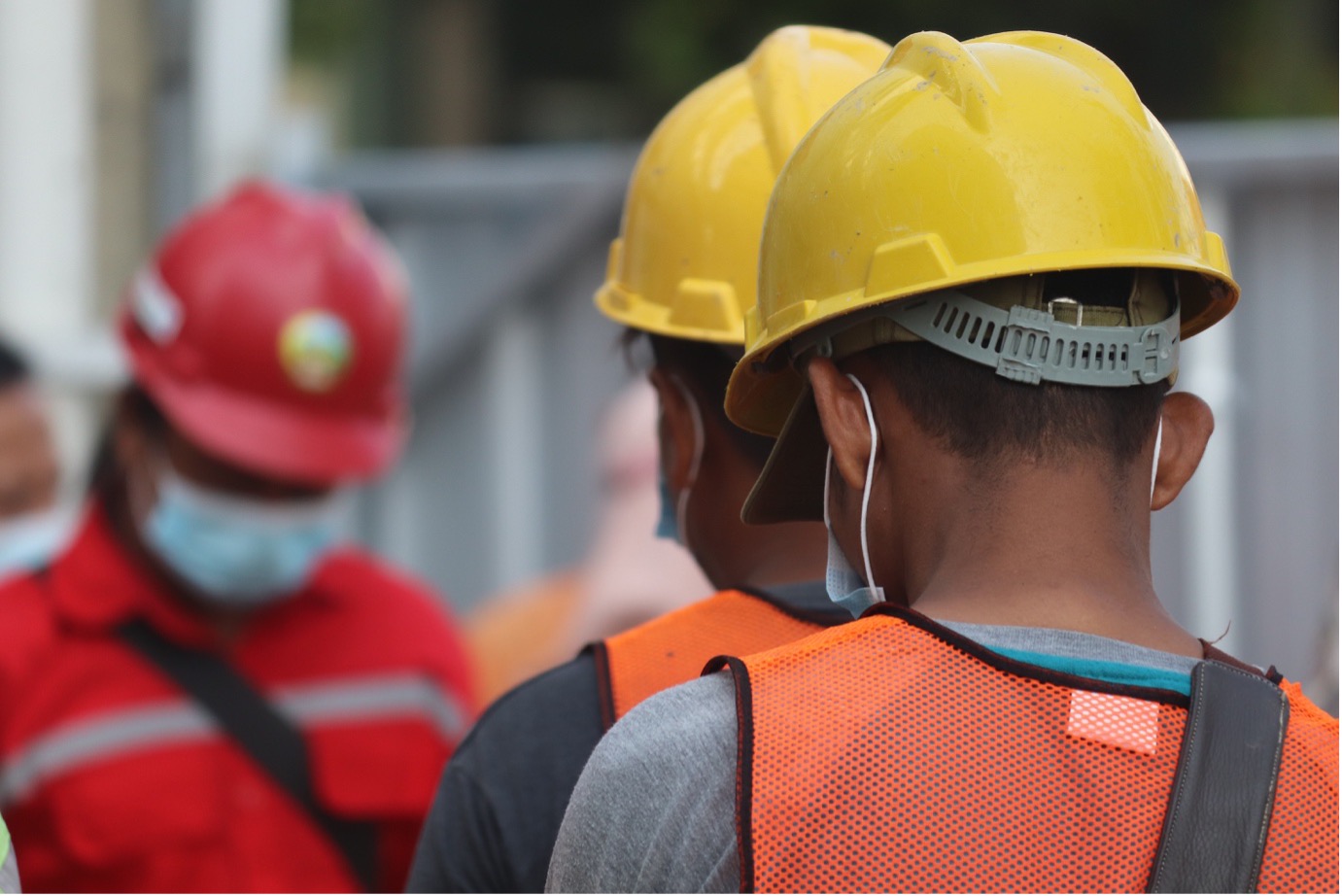
- PPE compliance checks: Confirming that workers are wearing the correct personal protective equipment for their task and that the equipment is in serviceable condition.
- Emergency systems verification: Checking fire extinguishers, first aid kits, emergency exits, eyewash stations, and spill response equipment are in place and accessible.
- Signage and safety communications: Verifying that safety signs are correctly placed, clearly visible, and in good condition.
- Incident and near-miss reporting: Capturing information about incidents and near misses in a structured format that supports investigation and corrective action.
Each of these inspection categories benefits directly from a digital platform. Standardised checklists ensure nothing is missed. Photo evidence documents conditions as they were found. Automatic timestamps prevent retrospective entries. And corrective action workflows ensure that findings lead to demonstrable outcomes rather than sitting in a filing cabinet.
ISO 45001: The International Standard for OHS Management
ISO 45001 provides the internationally recognised framework for occupational health and safety management systems. It takes a risk-based approach, requiring organisations to identify hazards, assess risks, implement controls, and continually improve their safety performance. Critically, it emphasises the role of workers in the safety process: safety is not something done to employees, but something they actively participate in.
ISO 45001 works well alongside complementary management system standards such as ISO 14001 (environmental management) and ISO 9001 (quality management), providing an integrated framework for organisations that want to manage safety, quality, and environmental performance within a unified system. Digital compliance management platforms support all three by providing a single source of truth for inspection records, corrective actions, and performance data across all three domains.
Implementing ISO 45001 using digital tools means that the standard's requirements are embedded directly into inspection checklists and workflow design. Workers are guided through the required checks, managers receive real-time visibility over compliance status, and the organisation builds a documented history of OHS performance that supports both continuous improvement and external certification audits.
Workers as Active Participants in Safety
One of the most valuable shifts that digital OHS tools enable is placing safety information and inspection capability directly in the hands of workers. Rather than relying on supervisors to conduct all formal safety checks, mobile inspection platforms allow workers to conduct pre-start checks, report hazards, and log near misses from their own devices, in real time, from wherever they are working.
This reflects a key insight from safety professionals: effective safety culture requires workers to take ownership of the risks they face, not simply comply with externally imposed procedures. As one safety leader observed:
Digital platforms support this mindset by making it easy for workers to participate in safety processes. A hazard spotted during a shift can be reported in under a minute, with a photo attached and an automatic alert sent to the relevant supervisor. That immediacy is not possible with paper-based systems, where the hazard report may sit in a form for days before reaching someone with the authority to act on it.
Five Principles for an Effective Digital OHS Program
Drawing on both the guidance of safety professionals and the practical experience of organisations that have made the transition to digital OHS, five principles consistently underpin successful programs:
ISO 7010 and the Role of Effective Safety Signage
Alongside inspection programs, effective safety communication within the workplace plays a critical supporting role in OHS. ISO 7010 governs the design and use of graphical safety symbols and safety signs, prescribing how signs should communicate prohibition, warning, mandatory action, and emergency information without reliance on text.
The rationale is straightforward: a safety sign that depends on a worker reading and comprehending a sentence introduces delay and the risk of misunderstanding, particularly in high-noise environments, multilingual workforces, or fast-moving situations where split-second recognition matters. ISO 7010 symbols are designed for immediate, cross-language comprehension, reducing confusion and improving the speed of correct response.
Digital inspection programs can include ISO 7010 signage checks as a standard component of workplace safety audits: verifying that required signs are correctly positioned, clearly visible, undamaged, and appropriate for the hazards present in each work area. When signs are found to be missing, obscured, or damaged, a corrective work order can be raised immediately, with a photo of the non-compliant condition attached to the record.
The Business Case for Digital OHS
Beyond the moral imperative to keep workers safe, there is a compelling business case for investing in digital OHS management. Workplace injuries generate direct costs through workers compensation claims, lost productivity, equipment damage, and incident investigation. They also generate indirect costs through reputational damage, reduced workforce morale, increased staff turnover, and the regulatory scrutiny that follows serious incidents.
Organisations that invest in structured, digital OHS programs consistently report improvements across all of these dimensions. Inspection completion rates improve when the process is straightforward and accessible from a mobile device. Hazard identification increases when workers can report quickly and easily. Corrective action turnaround times shorten when findings are automatically routed to the right person. And compliance audit preparation becomes a matter of running a report rather than searching through filing cabinets.
For the industries most affected by workplace injuries, including construction, mining, manufacturing, and transport, the return on investment from a robust digital OHS platform is not abstract. It is measured in incidents that did not happen, claims that were not made, and workers who went home safely at the end of their shift.
Naaman Shibi is a VP at Pervidi Software, leading the adoption of AI-powered inspection and compliance solutions across industries including mining and construction. With more than 25 years of experience in digital transformation, Naaman has helped organisations replace paper processes with efficient mobile technology. His focus is on delivering practical innovations, from AI image integration to predictive maintenance, that empower frontline teams and improve operational outcomes.
Ready to modernise your OHS inspection program?
Pervidi helps safety teams across construction, mining, manufacturing, and logistics run structured, documented, and auditable OHS inspections with real-time corrective action workflows.
Book a Demo