Digital Pre and Post Rental Inspection: Protecting Your Assets at Every Hire
Pre and post rental inspection is a fundamental part of the hire procedure. It is not only the shared responsibility of the renter and the hire business to document asset condition at the start and end of each rental period, but also a critical operational record that determines liability, enables maintenance planning, and supports compliance when disputes arise. Getting this process right every time, at every handover, requires a reliable system, and for the majority of hire businesses still using paper, that reliability is simply not achievable.
Why Pre and Post Rental Inspection Is a Liability Issue, Not Just an Admin Task
The purpose of a pre-rental inspection is to establish a clear, dated record of the asset's condition before it leaves your premises. The post-rental inspection creates an equally dated record of its condition on return. Together, these two records form the basis for any damage claim. Without them, a hire business has no defensible position if a customer disputes damage charges. Without a timestamped, photographic record signed by the operator at handover, the claim is a matter of one party's word against the other's.
This problem is compounded in high-volume hire operations. A business that processes dozens of vehicle or equipment rentals per day cannot afford a process where documentation is inconsistent, incomplete, or dependent on individual staff members remembering to file forms correctly. Every gap in the record is a potential dispute that the hire business will lose.
The Standard Pre and Post Rental Inspection Routine
Regardless of asset type, a well-structured pre and post rental inspection follows a consistent five-step routine:
- Safety walkthrough: A physical inspection of the asset for any pre-existing damage, safety hazards, or items requiring attention before the rental commences. This step must be completed with the customer present so both parties agree on the starting condition.
- Condition report: A detailed record of the asset's exterior and interior condition, including any existing scratches, dents, worn components, or operational faults. Photos should accompany written descriptions to provide unambiguous evidence of pre-existing issues.
- Fuel, fluid, and battery check: Recording the fuel level and confirming that fluid levels (oil, coolant, hydraulic fluid) and battery charge are at the correct level for hire. This creates a baseline so any discrepancy on return can be charged accurately.
- Feature overview and handover: A review with the customer of the asset's operating features, safety requirements, and any restrictions that apply to the rental. This step is both a customer service requirement and a risk management measure that reduces the likelihood of misuse damage.
- Documentation completion and sign-off: Both parties sign the completed inspection record, confirming they agree with the documented condition. In a digital system, this signature is captured electronically and timestamped to the GPS location of the handover.
Where Paper-Based Rental Inspections Fail
The limitations of paper checklists in a hire context are not theoretical. They are experienced daily by businesses that rely on them. Paper forms are physically fragile: they get wet, torn, lost in a cab, or filed in the wrong location. They are also subject to human interpretation: without a standardised digital form, different staff members record condition inconsistently, creating records that are difficult to compare across different inspection events for the same asset.
The filing problem is particularly acute. A dispute about damage on a vehicle returned three weeks ago requires locating the pre-rental inspection form from three weeks ago. In a busy depot with multiple vehicles and staff, that form may be in a pile of dozens of similar documents. If it cannot be found quickly, or at all, the hire business is effectively defenceless. With a digital inspection platform, the record for any asset, on any date, is retrievable in seconds through a dashboard search.

How Mobile Devices Transform the Rental Inspection Process
The smartphone or tablet has become the natural tool for pre and post rental inspection because the features built into every modern mobile device map directly to the requirements of the inspection process.
Camera and photo annotation
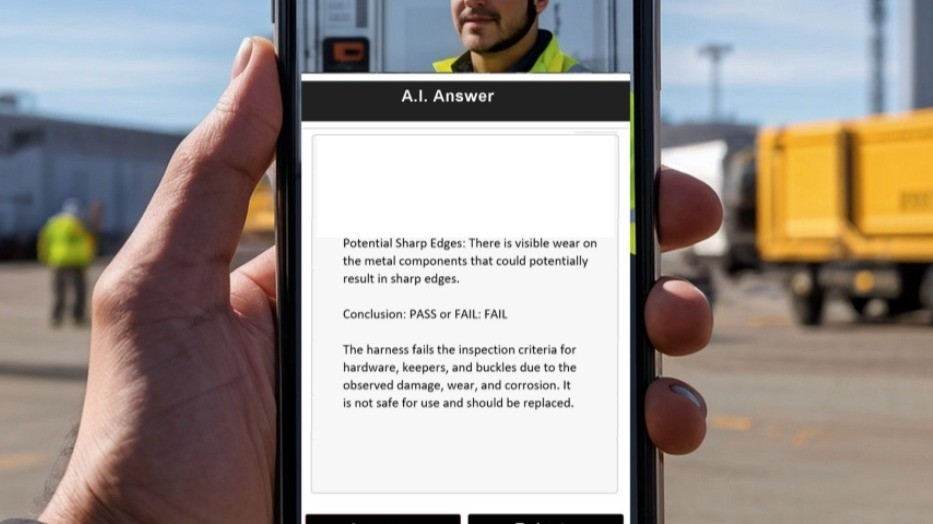
Damage is recorded photographically at the point of inspection, with the ability to annotate photos to highlight specific areas of concern. A photo with a drawn circle and a note is far more defensible in a dispute than a handwritten description that depends on the reader's interpretation.
Standardised checklists
The touchscreen prompts inspectors through every required field before the form can be submitted. There are no blank fields, no missed steps, and no variation between inspectors. Every rental generates a complete record that meets the same standard, regardless of which staff member conducted the inspection.
GPS and timestamp
Each inspection record is automatically tagged with the time and location at which it was completed. For businesses with multiple depots, this confirms precisely which site a vehicle was checked out from, which is relevant both for maintenance routing and for any subsequent dispute resolution.
Electronic signature capture
The customer's signature is captured on the screen at handover and embedded in the inspection record. There is no risk of a signature being disputed as forged or absent, because the record is digital, timestamped, and stored centrally the moment it is submitted.
Beyond Disputes: Rental Inspections as Maintenance Data
A well-run pre and post rental inspection programme does more than protect against damage claims. Over time, the accumulated inspection data across a fleet of hire assets builds a detailed maintenance picture. Patterns in recurring faults on specific assets, or specific asset types, become visible. A vehicle that consistently returns with the same tyre wear pattern may need alignment. A piece of equipment that frequently shows hydraulic fluid loss may require a seal inspection before its next hire cycle.
This data-driven maintenance capability is only achievable when inspection records are digital and searchable. With paper, the information exists but cannot be aggregated or analysed without a significant manual effort that most hire businesses lack the time to undertake. With an asset management platform that links rental inspection records to each asset's maintenance history, this analysis happens automatically, and the business can move from reactive maintenance to a genuinely proactive approach.
Naaman Shibi is a VP at Pervidi Software, leading the adoption of AI-powered inspection and compliance solutions across industries including mining and construction. With more than 25 years of experience in digital transformation, Naaman has helped organisations replace paper processes with efficient mobile technology. His focus is on delivering practical innovations, from AI image integration to predictive maintenance, that empower frontline teams and improve operational outcomes.
Ready to replace paper rental inspection forms with a digital system that protects your business and your assets?
Book a demo to see how Pervidi turns every pre and post rental inspection into a searchable, connected asset history.
Book a Demo