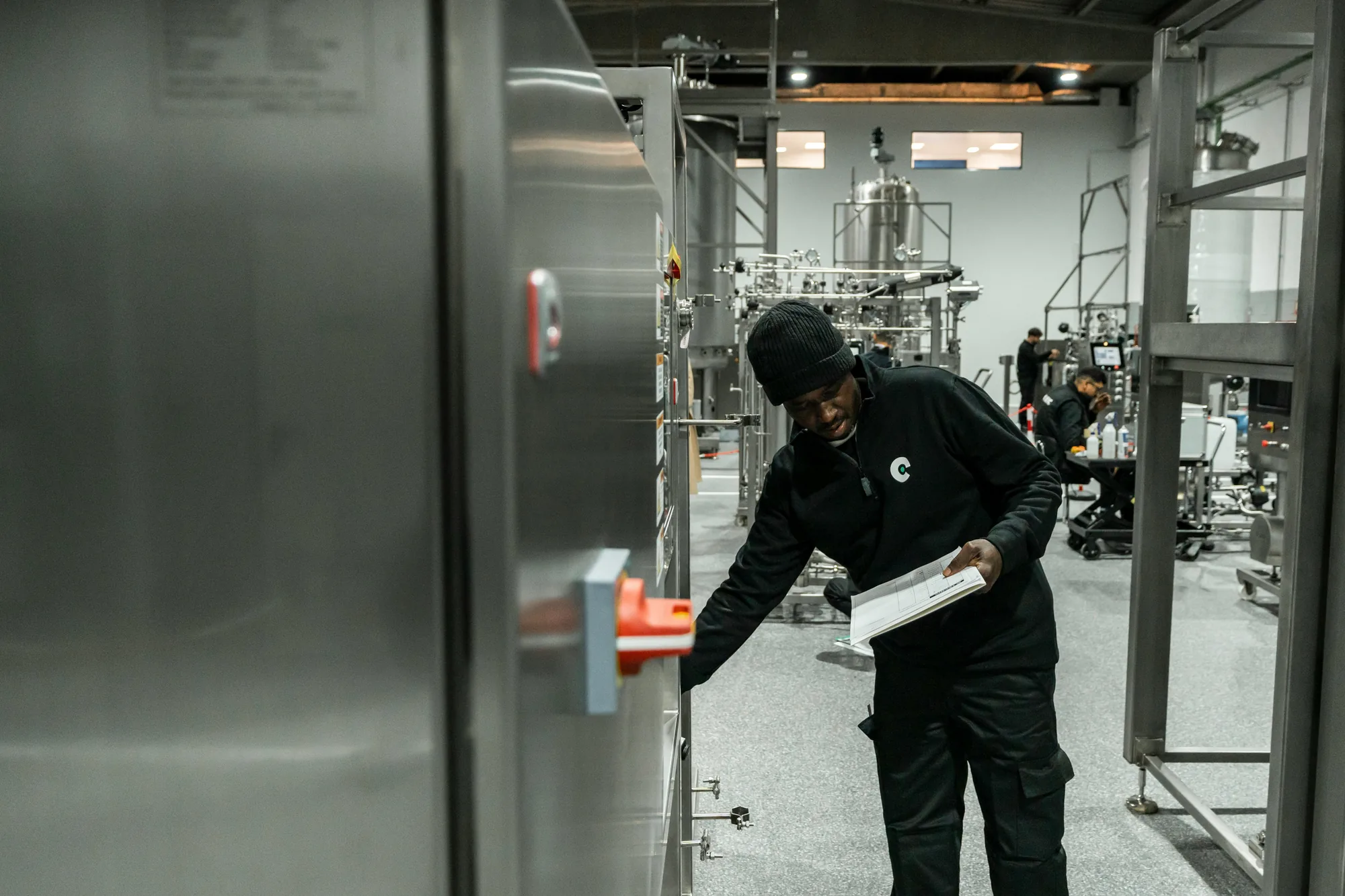
Every Inspection Is a Conversation With an Asset
The best organisations don't just inspect their assets. They listen to what those assets are telling them.
Walk through any manufacturing plant, mine, hospital, warehouse, commercial facility or utility, and you'll find thousands of assets quietly doing their job. Motors turn, pumps move product, forklifts shift materials, and emergency equipment sits ready for the day it might be needed.
Most of the time, these assets don't demand attention. They leave clues: a slight vibration, a small oil leak, corrosion starting to show, a damaged safety label, an inspection tag that's expired, a battery nearing the end of its life. An inspection is our chance to notice those clues. Too often, though, we treat it as a task to tick off rather than a conversation worth continuing.
Every Inspection Adds Another Chapter
Think about meeting someone for the first time. You know almost nothing about them. But meet them once a month for five years, and you'll build a real picture of their history, their habits, and how their circumstances have changed.
Assets are much the same. One inspection gives you a snapshot. Sixty inspections give you a story, with each one adding another chapter to that asset's life. Over time, those chapters start to reveal patterns you'd never spot from a single report on its own: a hydraulic leak that keeps coming back, the same electrical component failing repeatedly, corrosion slowly creeping across a storage tank, vibration in a motor that's edging upward, or emergency lighting batteries that are gradually losing performance. No single inspection tells that story. The history does.
Assets Have Memories. Organisations Often Don't.
One of the biggest challenges in maintenance and operations is organisational memory. People retire. Supervisors move to other sites. Contractors change. Paper records go missing, and old spreadsheets get archived and forgotten. Knowledge that took years to build can disappear surprisingly fast.
The asset, on the other hand, remembers everything: every defect, every repair, every inspection, every replacement. The real question is whether the organisation remembers it too. When inspection history is properly preserved in an asset management system rather than scattered across paper files and spreadsheets, an asset's story stays available long after the people who looked after it have moved on, and that continuity becomes one of the most valuable sources of operational knowledge an organisation has.
What an inspection history actually preserves
- Every defect ever recorded against the asset, not just the most recent one
- Every repair, replacement part, and service date
- Photographic evidence of how a defect has changed over time
- Which inspector found what, and when
- The pattern of pass results that still shows gradual deterioration
Looking Beyond Pass and Fail
Traditional inspections usually end with a simple result: pass or fail, compliant or non-compliant. Those outcomes matter, but on their own they rarely tell the full story.
Take a pump that passes every monthly inspection. Looked at individually, each report says everything is fine. Looked at together, the history might show minor oil leaks recorded over the last six inspections, none serious enough to fail, none urgent enough to trigger immediate work. Put side by side, though, those observations tell a different story. The asset isn't just passing its inspections. It's deteriorating. That distinction is exactly what should be shaping maintenance decisions.

The Lifecycle Is More Than Installation and Replacement
Most organisations think of an asset's lifecycle in broad strokes: purchase, installation, operation, maintenance, replacement. The reality is far more detailed than that.
Every inspection adds information about how an asset is ageing, how often defects show up, how quickly repairs are needed, and how operating conditions are affecting reliability. Over time, that history helps answer the questions every asset manager eventually has to face. Should we keep repairing this equipment? Is the failure rate climbing? Has this become a safety risk? Is replacement now the more economical option? Inspection history, tied directly to work orders and maintenance records, is what gives you the evidence to answer those questions with confidence, rather than a hunch.
This is especially true in asset-intensive sectors. A mining operation tracking hundreds of mobile plant items, a manufacturing facility running production lines around the clock, or a utilities provider managing distributed infrastructure all face the same underlying problem: too many assets, too much history, and no practical way to hold it all in one person's head.
Compliance Creates a Valuable By-Product
Many inspections exist purely because regulations require them: emergency lighting, fire extinguishers, pressure vessels, fall protection equipment, electrical assets, lifting equipment and so on. The primary goal is compliance. But every one of those inspections also creates something just as valuable: knowledge.
When organisations hold onto that inspection history, they get far more than an audit trail. They build a genuine understanding of how their assets behave over time, and compliance records quietly become operational intelligence.
Technology Doesn't Replace Experience
No software can replace an experienced inspector. Spotting unusual wear, noticing a subtle change, or questioning a result that doesn't look right still comes down to skilled people. Technology has a different job to do. It remembers. It connects the dots. It organises information and surfaces patterns across thousands of inspections that no one could realistically hold in their head.
Increasingly, artificial intelligence is helping organisations spot relationships between recurring defects, maintenance activity and inspection outcomes. It isn't replacing engineering judgement. It's giving experienced people better information to base that judgement on, in the same way that a doctor reviewing a patient's full medical history makes a better call than one looking at a single test result. For more on where that boundary sits, see our related piece on why AI doesn't replace inspectors.
The Conversation Never Ends
The most successful organisations don't treat inspections as isolated events. They see them as an ongoing conversation with every asset they own. Each inspection is really asking a few simple questions: how are you performing, what's changed, and what should we be watching closely? The asset answers through what's observed, measured, photographed and recorded, and those answers become part of its history. The next inspection continues the conversation.
Over months and years, that conversation becomes one of the richest sources of operational knowledge an organisation has. Every asset has a story to tell. The organisations that get the best results are usually the ones that take the time to listen.
Questions worth asking about your own inspection history
- If an inspector left tomorrow, would their knowledge of your assets leave with them?
- Can you see the trend behind a repeated finding, not just its most recent result?
- Are your compliance inspections also building a usable maintenance history?
- Would your team notice if the same defect kept reappearing across quarters?
- Is your inspection data structured enough for a system to find patterns in it?
How does your organisation see inspections: a compliance box to tick, or a history that's helping you make better maintenance decisions, extend asset life and reduce risk? Organisations that move from paper-based, disconnected records to a structured digital inspection process are usually the ones that discover just how much their assets have been trying to tell them all along.
Naaman Shibi is a VP at Pervidi Software, leading the adoption of AI-powered inspection and compliance solutions across industries including mining and construction. With more than 25 years of experience in digital transformation, Naaman has helped organisations replace paper processes with efficient mobile technology. His focus is on delivering practical innovations, from AI image integration to predictive maintenance, that empower frontline teams and improve operational outcomes.
Ready to start listening to what your assets are telling you?
See how Pervidi turns every inspection into a searchable, connected asset history, with AI-powered pattern detection that helps your team act before a defect becomes a failure.
Book a Demo