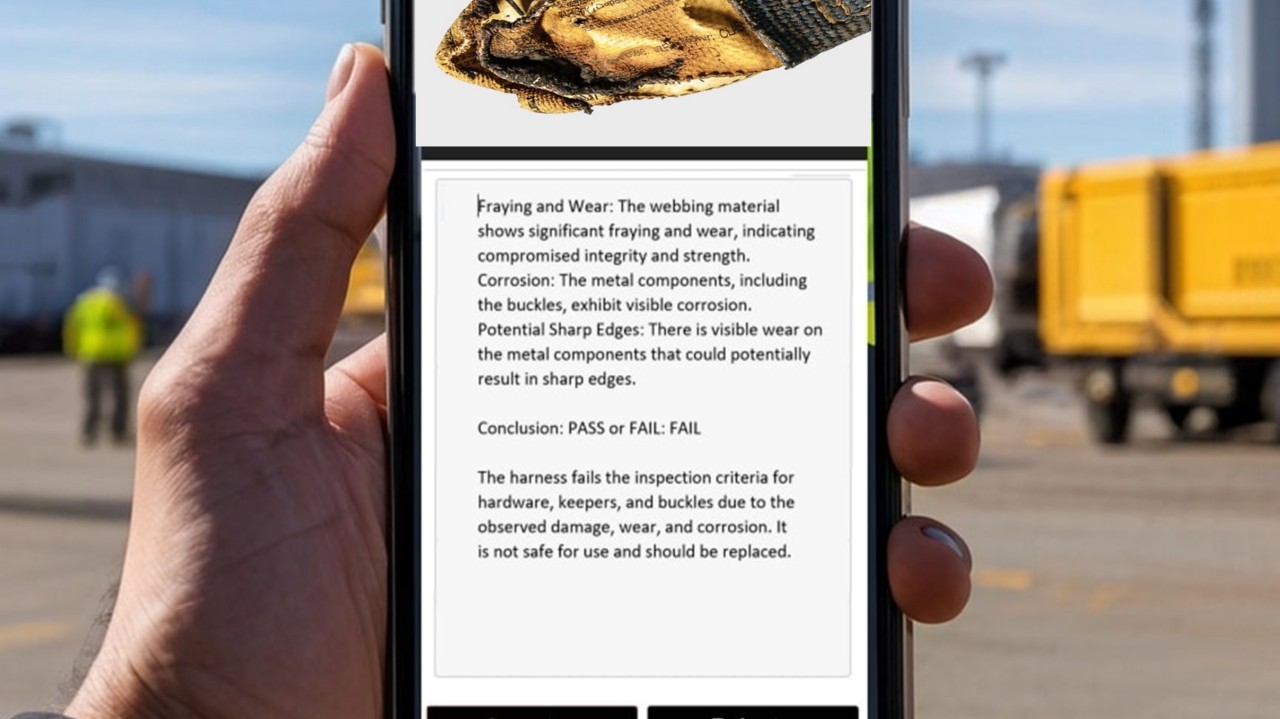
Beyond AI: What Happens When Large Language Models Meet Inspection Data?
Artificial intelligence has already started changing how inspections are performed. Images can be analysed for defects, voice can be converted into inspection observations, and information can be extracted automatically from documents. A newer development could matter even more for inspection, asset management, and maintenance platforms: large language models, or LLMs.
Most people associate LLMs with conversational assistants: ask a question, get an answer. Inside an inspection platform, the potential is considerably broader. Imagine being able to ask "Which assets at this site have shown recurring defects over the past two years?" or "Summarise the major safety issues identified across our Victorian operations this quarter." Instead of exporting spreadsheets and manually cross-referencing reports, an LLM could help a user interrogate years of operational data using everyday language. That changes the relationship between people and inspection data.
What Is the Difference Between AI and an LLM?
The terms are often used interchangeably, but they are not the same thing. Artificial intelligence is the broader category. Traditional AI and machine learning systems are typically designed for relatively specific tasks: identifying an object in a photograph, recognising corrosion, or predicting the probability of equipment failure. A large language model is a particular type of AI designed to understand, interpret, and generate language.
That distinction matters when dealing with inspection information. Inspection databases contain structured fields such as dates, asset details, results, and status codes, but they also hold enormous amounts of unstructured information: inspector comments, defect descriptions, corrective action notes, maintenance histories, work order descriptions, voice observations, and procedures. That unstructured content carries enormous operational value, but it has historically been difficult to analyse at scale. LLMs create a new way of working with it.
From Dashboards to Conversations
Traditional reporting requires an organisation to decide what to measure before building the report. A dashboard showing completion rates, outstanding corrective actions, or overdue work orders remains extremely valuable, but it cannot answer a question nobody anticipated. If corrective actions have increased at one site over six months, someone still needs to extract data, review comments, and compare periods manually.
With an LLM built into a digital inspection platform, that interaction could become conversational. A manager could ask the question directly, and the system could examine relevant inspection records, corrective actions, and asset histories to summarise what the underlying data indicates.
Finding Patterns Hidden in Years of Inspection Data
Consider an organisation with 20 sites, 50,000 assets, and several years of inspection history, representing millions of individual inspection responses. Hidden inside that history may be patterns such as the same hydraulic component failing across several machines, one site consistently reporting more corrosion than others, or recurring defects appearing months before a major equipment failure. A traditional database can certainly contain this information. The difficulty is finding the relationships, particularly where they are buried in human language and unstructured observations rather than structured fields. This is where an LLM adds another analytical layer.
Show me the five assets with the highest number of recurring defects.
Summarise all critical inspection findings from last week.
Which corrective actions have been overdue for more than 30 days, and what are the common reasons?
Compare inspection performance between these three sites.
The important change is not simply that a computer produces an answer. It is that people no longer need to understand the underlying database structure to explore their own operational information. The interface between the user and the data becomes plain language.
Does the LLM Have to Run in the Cloud?
Not necessarily. Large language models originally required enormous computing resources, and the largest general-purpose models still do. But bigger is not necessarily better for every business application. An inspection platform may not need a model capable of discussing every subject imaginable; it needs a model that understands its terminology, assets, procedures, and operational environment well. Smaller, more specialised language models are becoming increasingly capable while requiring considerably less computing infrastructure, which opens the possibility of running a model inside an organisation's own technology environment.
This matters particularly for organisations operating in mining, energy, defence, utilities, government, and other security-sensitive environments. An organisation might use a commercial cloud-based LLM, a private cloud environment, or an appropriately sized model running entirely within its own infrastructure. The question is no longer just "which AI model is the smartest?" It also becomes: where is the model running, what information is being sent to it, where is that information processed and retained, and who can access it?
Data Security Cannot Be an Afterthought
To answer a question like "Summarise recurring failures across our processing plant," a system may need access to asset records, inspection observations, maintenance history, and corrective actions, which together can reveal considerably more about a facility than any single inspection report. That is why integrating LLM technology into an enterprise compliance and quality assurance platform requires careful architecture, permissions, and governance.
Access should follow the same principles organisations already apply to enterprise information: a site supervisor sees information relating to their site, a maintenance manager accesses equipment history, an executive sees aggregated information across operations, and sensitive information stays restricted. The LLM should operate within those boundaries rather than becoming a way around them. For organisations with strict security or data sovereignty requirements, a locally deployed model keeps operational data inside the organisation's controlled environment rather than transmitting it to a public AI service, though security still depends on architecture, access controls, and governance, not the deployment location alone.
Why LLMs Should Not Make Safety Decisions
Large language models can produce incorrect information, misunderstand context, or generate an answer that sounds convincing even when the underlying conclusion is wrong. That matters enormously in safety, inspection, and maintenance environments. An LLM should not become an unquestioned authority making critical engineering or safety decisions. Its better role is as an analytical assistant: it can help find information, summarise history, highlight patterns worth investigating, prepare reports, and help experienced people ask better questions. Engineering judgement, safety decisions, and critical corrective actions should remain subject to appropriate human review.
AI and LLMs Working Together
The most useful future may not involve choosing between traditional AI and LLMs. It may involve combining them. Imagine an inspection where AI image analysis identifies possible corrosion, the inspector verifies the observation, and the asset management platform records the defect and creates the corrective action. An LLM then reviews the asset's history and finds that similar corrosion has been recorded four times in the previous 18 months, and that the same issue is appearing across three similar assets at the same location. When a maintenance manager asks whether there is a common pattern, the system can surface the relevant evidence for them to investigate. Different technologies perform different jobs: image AI sees, inspection software records, workflow automation acts, and the LLM helps people understand.
The Real Opportunity Is Organisational Memory
Perhaps the most valuable role for LLMs in inspection management is not automation at all. It is memory. Organisations accumulate enormous knowledge through inspections: every observation, defect, photograph, repair, and corrective action adds another piece of information about how their assets and operations behave. But that knowledge is often fragmented across systems and difficult for people to retrieve. Employees leave, contractors change, and experienced supervisors retire, so while the information may technically still exist, the organisation's ability to use it diminishes.
An LLM connected appropriately to an organisation's inspection history could make that accumulated knowledge considerably more accessible. A new maintenance manager could ask what the major reliability problems have been with an asset over the past five years, and begin with a summary rather than hours of manual searching. That is a different form of organisational intelligence, and it is a meaningful reason to keep inspection history in a structured system rather than scattered paper records or disconnected spreadsheets.
The Next Generation of Inspection Software
The first generation of digital inspection software replaced paper. The next generation connected inspections with assets, corrective actions, and work orders. AI introduced automated recognition and analysis. LLMs could introduce something different again: the ability to have a conversation with the information those systems have accumulated. That does not mean dashboards disappear, inspectors disappear, or engineering judgement disappears. It means another layer is being added, one that can help organisations understand years of inspection information faster, discover relationships that are difficult to see manually, and make accumulated operational knowledge accessible to the people who need it.
The most important question may therefore no longer be "what data are we collecting?" It may become: what can our inspection history tell us if we finally have the ability to ask it the right questions?
Frequently Asked Questions
What is the difference between AI and a large language model (LLM)?
Artificial intelligence is the broader category and includes systems built for specific tasks, such as recognising corrosion in a photograph or predicting the likelihood of equipment failure. A large language model is a particular type of AI designed to understand, interpret, and generate language. In an inspection platform, that means an LLM can work with unstructured text such as inspector comments, defect descriptions, and maintenance notes in ways traditional AI models are not built to do.
Can a large language model analyse years of inspection and maintenance data?
In principle, yes. An LLM connected to an organisation's inspection history could review inspection records, defect notes, corrective actions, and work orders across sites and years, and summarise patterns such as recurring failures or repeated defects. This turns a search-and-export exercise into a plain-language question, though the underlying data still needs to be accurate and well governed for the answer to be reliable.
Does an LLM used for inspection data have to run in the cloud?
No. Smaller, more specialised language models are becoming capable enough to run within an organisation's own infrastructure rather than a public cloud service. For organisations in mining, energy, defence, utilities, or government where data sovereignty matters, this creates the option to keep the model and the operational data it reads inside a controlled environment.
Is it safe to give an LLM access to inspection and asset data?
It can be, if access follows the same permission principles already applied to other enterprise systems. A site supervisor should see information relating to their site, a maintenance manager should access equipment history, and sensitive information should stay restricted. The objective is not to give an LLM access to everything, but to have it operate within the same access boundaries the organisation already enforces.
Can an LLM make safety or engineering decisions on its own?
No. Large language models can produce incorrect or misleading answers that still sound convincing, which makes them unsuitable as an unquestioned authority for safety or engineering decisions. The more appropriate role is as an analytical assistant that helps find information, summarise history, and highlight patterns worth investigating, while engineering judgement and corrective action decisions remain subject to human review.
How do AI image recognition and LLMs work together in an inspection platform?
They perform different jobs that complement each other. AI image analysis can flag a possible defect such as corrosion, the inspection platform records it against the asset, and an LLM can then review that asset's history to identify how often the same issue has recurred and whether similar assets at the same site show the same pattern, giving a maintenance manager evidence to investigate rather than just a single flagged photo.
Naaman Shibi is a VP at Pervidi Software, leading the adoption of AI-powered inspection and compliance solutions across industries including mining and construction. With more than 25 years of experience in digital transformation, Naaman has helped organisations replace paper processes with efficient mobile technology. His focus is on delivering practical innovations, from AI image integration to predictive maintenance, that empower frontline teams and improve operational outcomes.
Ready to see what AI-powered inspection intelligence looks like in practice?
See how Pervidi AI turns scattered inspection records into insights your team can actually use, without losing sight of who is accountable for the decision.
Book a Demo